
"coffee planting density"
2000 article(s) found

Planting High altitude Coffee density-- introduction to the requirements of planting Environment for planting Coffee
Planting high altitude coffee density-requirements for planting environment for growing coffee introduction 3000-6000 feet high altitude (about 1000 meters to 2000 meters) provides ideal growth conditions for coffee: an average frost-free climate of 60-70 degrees Fahrenheit throughout the year, about 80 inches of moderate rainfall, plus abundant sunshine. Coffee beans grow slowly in cold mountain areas, but the slow ripening process makes coffee

Introduction of Variety treatment in High altitude Coffee Bean density planting Environment
Introduction to the method of variety treatment in the planting environment of high altitude coffee beans the higher the altitude of coffee beans, the better the taste. Coffee beans grown at high elevations have pleasant acidity, rich aroma and rich taste, which everyone likes; on the contrary, coffee grown at low elevations has almost no sour taste, single taste and plain taste. That's why baristas are always there.
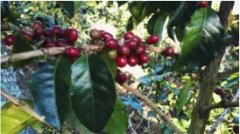
A hybrid between Arabica and Robusta [Catimor] Katimo and its branches
The exchange of professional baristas please pay attention to the coffee workshop (Wechat official account cafe_style) the interspecific hybrid between Arabica and Robusta [Catimor] the hybrid between Katimo Caturra and Timor. It was discovered in Portugal in 1959. The palate is obvious and easy to distinguish, the bitter acid is a little astringent, the aftertaste is often salty, and there is low acidity in Robusta in the Timo family.

What is the density of very hard coffee beans? coffee beans are soft and hard and the size of powder grains.
Professional coffee knowledge exchange more coffee bean information Please pay attention to the coffee workshop (Wechat official account cafe_style) hard beans (Hard Bean HB) and soft beans (Soft Bean SB) are the two simplest words to describe the density of coffee beans. They are within the range of very hard beans (strictly hard bean SHB) and very soft beans (strictly soft bean SSB). No.
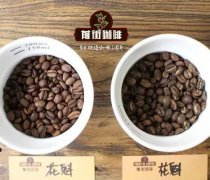
Development status and derivation of Robusta coffee beans
Https://baike.baidu.com/item/ Robusta / 4878176?fr=aladdin Robusta species (Latin name Coffee Robusta Linden), one of the most important coffee tree varieties in the world. The leaf rust-resistant varieties found in Congo in Africa have stronger disease resistance than Arabica. Different growth environments: coffee beans grown in Arabica

Classification and causes of defective beans in SCAA Coffee SCAA level: Italian mixed beans with secondary defects
CAA level: whole sour bean is a first-level defect; one whole sour bean = a complete defect name: local sour bean SCAA level: local sour bean is a secondary defect; less than half of a bean is sour bean, 3 beans = 1 complete defect cause: agriculture and treatment. Sour beans are caused by fermentation, and they are contaminated by microorganisms in many places in the process of harvest and treatment.

Interspecific hybrid variety | A variety derived from the cross between Alabi Karabusta and wild species
The exchange of professional baristas please pay attention to the coffee workshop (Wechat official account cafe_style) Interspecific hybrid variety [Centroamerica H1] Sarchimor T5296 x wild Rume Sudan, which is crossed between Alabi Carolbusta and wild species, dwarf, green top, planting density such as bourbon, 30004000 plants per hectare, medium-sized beans, low resistance to leaf rust

How important is the moisture content and density of raw beans to the baker?
Professional coffee knowledge exchange more coffee bean information Please follow the coffee workshop (Wechat official account cafe_style) Today bean bakers are adept at judging by the color of raw beans-the touch from the touch-the rising rate of temperature during baking to determine whether the moisture content of raw beans is too dry or too high. The moisture content of the freshly picked coffee fruit is about 45-55%, and the subsequent treatment method

Classification and causes of defective beans in Fine Coffee SCAA
The growth environment of boutique coffee beans also has higher requirements. Generally grow at an altitude of 1500 meters or even more than 2000 meters above sea level, with appropriate precipitation, sunshine, temperature and soil conditions. Some world-famous coffee beans also have a special geographical environment, such as the alpine clouds in the Blue Mountains, the free shade provided by the afternoon clouds in Kona, and the volcanic ash soil in Antigua.

The importance of coffee planting altitude: does height really determine the quality of coffee beans?
Professional coffee knowledge exchange more coffee bean information follow the coffee workshop (Wechat official account cafe_style) pick up a bag of roasted boutique coffee, you can learn about the beans from its bag: country of origin, region of origin, manor, roasting degree, flavor if it is a bag of single beans, the information on the bag will usually have an altitude.

The growth process of Coffee Tree introduction to the method of flavor description in planting environment and region
The growing process of coffee trees: flavor description of growing environment and producing area although altitude is only one of the many factors to measure the quality of coffee, it is definitely the most important one. The next time you go to the coffee shop, please ask the barista to tell you the origin of the coffee in the cup, which will not only enrich your coffee knowledge, but also improve the quality of your overall coffee experience.

Description of the taste and flavor of the density producing area of Antigua Huasen coffee in Guatemala with high alcohol thickness
Vivette South Fruit producing area, we have to introduce the star manor El Injerto, whose name comes from the unique fruit name of Vivette Nanguo region. There are quite a variety of coffee trees in the manor. Here, Bourbon, Pacamara, Marago Gippe and other varieties are planted. It has a very beautiful history in the COE competition in Guatemala.

A hybrid between Arabica and Robusta & #61548; [Colombia] Columby
The exchange of professional baristas please pay attention to the coffee workshop (Wechat official account cafe_style) the interspecific hybrid between Arabica and Robusta [Colombia] Columbia also known as Variedad Colombia has the sweet, bright, rich aroma of caramel and chocolate. The hybrid variety of Caturra and Timor has strong resistance to leaf rust and high yield.

Coffee planting: coffee farm treatment in Nicaragua
Communication of professional baristas Please pay attention to the water tank in front of the coffee workshop (Wechat official account cafe_style) is a density classifier (density syphon). No matter which method the coffee fruit will be treated later, all the red fruits should be screened here first.
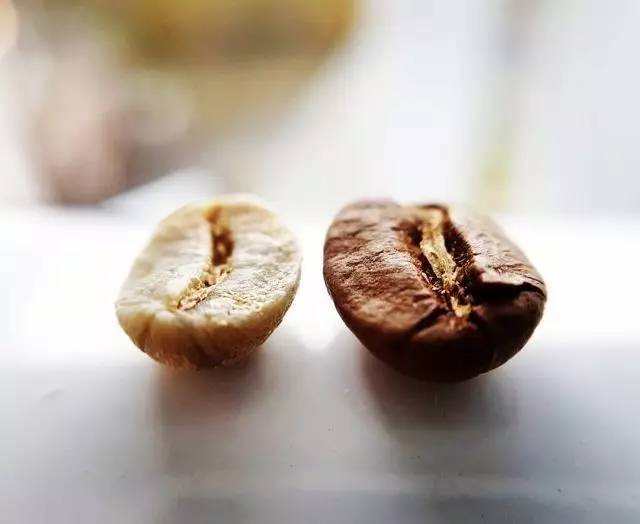
How to bake coffee from different producing areas
How to bake coffee from different producing areas? should you use the same baking curve for coffee from Narino in Colombia and coffee from Sidamo in Ethiopia? The answer is likely to be no. The microclimatic conditions such as climate, soil type and planting altitude of coffee producing countries are different, and the coffee produced by different countries is also different. In the baking process

When the density of Taiwanese cafes exceeds Paris, the black gold trend has endless business opportunities
According to statistics from the International Coffee Organization, the world drank an average of 2 billion cups of coffee a day in 2014, and if estimated at retail prices, the annual output value of coffee has already exceeded 100 billion US dollars. Therefore, coffee is called black gold industry, and it deserves it. Interview = Lin Zhengwen, Chen Yunzhu Author = Lin Zhengwen in David. David T. Courtwright) was written.

High quality coffee beans high altitude coffee beans Sidamo Coffee Flavor description
High quality Coffee beans High altitude Coffee beans Coffee Coffee description the best quality coffee beans are usually strong and usually grow at an altitude of more than 4500 meters. The growth of these coffee beans is very slow, so the density of the beans is very high, and the gap in the middle of the beans should be curved. In contrast, coffee beans grown at low elevations usually have a lower density and slightly open gaps in the middle.

Coffee altitude-how high is the altitude for growing coffee beans?
Coffee altitude-the altitude above which coffee beans are generally grown will directly affect the appearance of coffee beans. When you take a closer look at raw coffee beans, you will find that the size and density of each kind of coffee are different. Are the coffee beans in your hand small and dense? Is the gap in the middle of the bean tightly closed or open? Is the gap straight or curved?

Costa Rican Fine Coffee Las Jas Estate Coffee Flavor Taste Aroma Description
In general, altitude is positively correlated with density. In high altitude areas, the temperature is low, the coffee fruit grows slowly and the density is high; in low altitude areas, the coffee fruit grows faster and the density is low. Coffee production is currently divided into 8 major regions: Brunca, Turrialba, Tres Rios, Orosi, Tarrazu, Central Valley, Western Valley, Guanacaste. Tarrazu、Tre

Coffee bean density high altitude which producing countries grow coffee at the highest altitude
According to the coffee-producing countries, the reason for the emergence of such a classification standard according to the altitude of the coffee producing area is mainly because the quality of coffee produced at high altitude is generally higher than that at low altitude, because the temperature is low at high altitude. Slow coffee production is conducive to the accumulation of beautiful substances. And the raw beans with high maturity have good expansibility when baking, which is beneficial to baking, and the quality is more stable.